The first time I heard about the Rapture, I was a new Christian in Albania. Faith had been forbidden there for most of my childhood, so everything about the Bible still felt new to me, and this idea felt even newer. One day, millions of people would simply be gone, caught up to meet the Lord, and the world they left behind would wake up to empty beds, empty cars, and no explanation.
I remember thinking it sounded interesting, and honestly, a little far-fetched. But I also remember the thought that came right after it. We believe in a God of miracles. If He can part a sea, He can do this too. It wasn’t an impossibility for Him, and it stayed with me long after that day.
I didn’t know then that, years later, it would become the heart of a film Greta and I would make.
The film we didn’t want to make
When we first sat down to write Residuum, we were going to make it about COVID. It made sense on paper. We had lived through the lockdowns, and they had touched something deep from our childhood under communism. But by then, we had been talking about COVID for more than two years, and every time we tried to write it, it felt flat. We didn’t want to spend another year inside that story.
Then one day, Greta and I were talking it through, and the idea came out almost by itself: what if it’s about the Rapture? I had been reading the Bible at the time, and I was in the book of Revelation, so it was already on my mind. Suddenly, we could see the whole film. Millions of people vanish without a trace; nobody knows what happened, and everyone who is left has to decide what to believe.
We hadn’t planned it that way. It arrived right as we were about to start writing, and it felt like the story had been waiting for us.

The stories that came before ours
Of course, once we decided to make a film about disappearances, I had to watch the films that had already told this story. What surprised me was how different they are from each other.
The one that started it all is A Thief in the Night, from 1972. It opens with a young woman named Patty waking up to a radio report that millions of people have disappeared, and it became one of the most widely watched Christian films of its time, eventually growing into a four-film series. Of all of them, it felt the most true to the Bible to me. It doesn’t try to soften anything.
Then came Left Behind, based on the novels by Tim LaHaye and Jerry B. Jenkins, a series that has sold more than 65 million copies. Kirk Cameron starred in the first film in 2000, and Nicolas Cage led the 2014 remake. I thought it was pretty good, and it showed me how big the appetite for this story really is. It isn’t a small question, either. In a 2022 Pew Research Center survey, 39 percent of American adults said they believe we are living in the end times.
The Leftovers, the HBO series based on Tom Perrotta’s novel, goes somewhere else entirely. Millions of people vanish in an instant, an event everyone calls the Sudden Departure, but no one can explain it. It felt like a mixture to me, almost a secular Rapture, and it’s really a story about grief and about how the people left behind try to keep living.
Watching all three, I started to understand where Residuum fit. Each of those stories tells you what happened. We wanted to make one that lets you wonder.
Each of those stories tells you what happened. We wanted to make one that lets you wonder.
What the government says
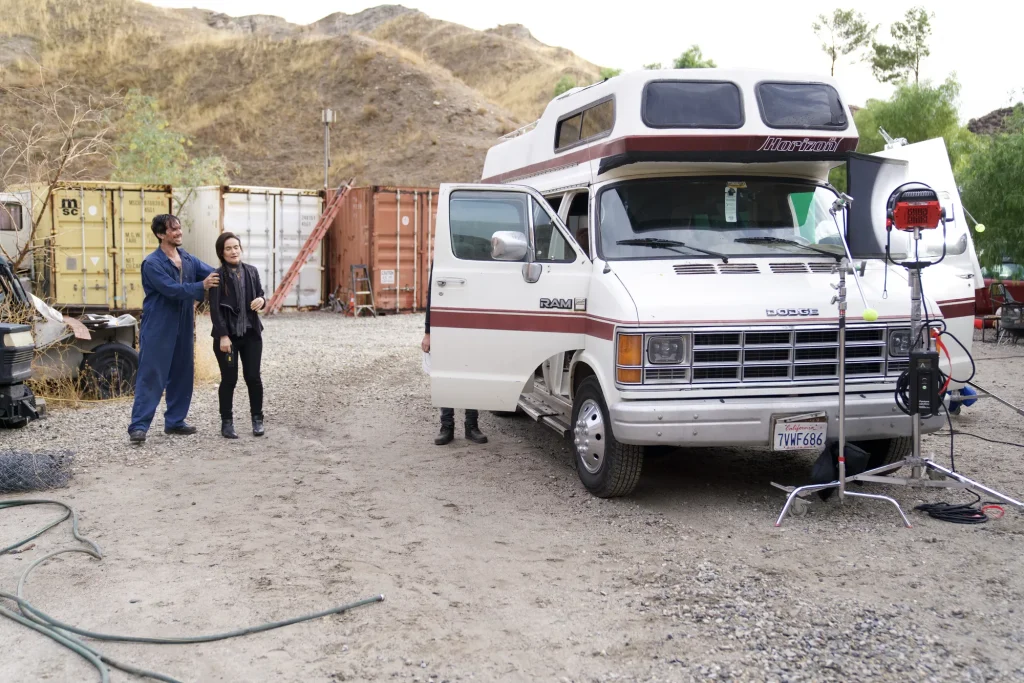
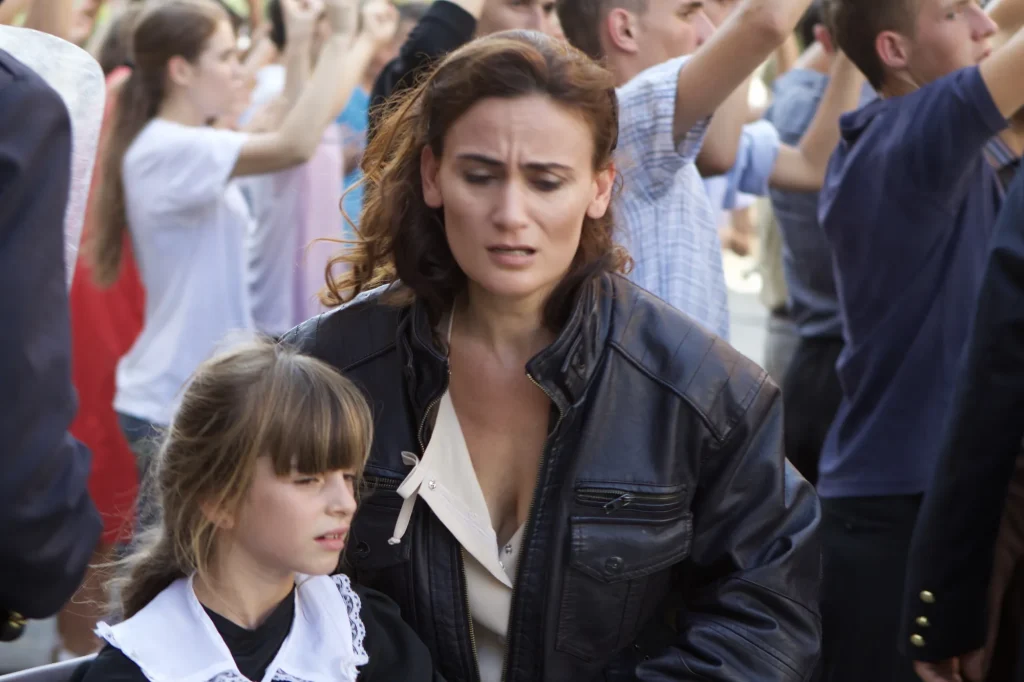
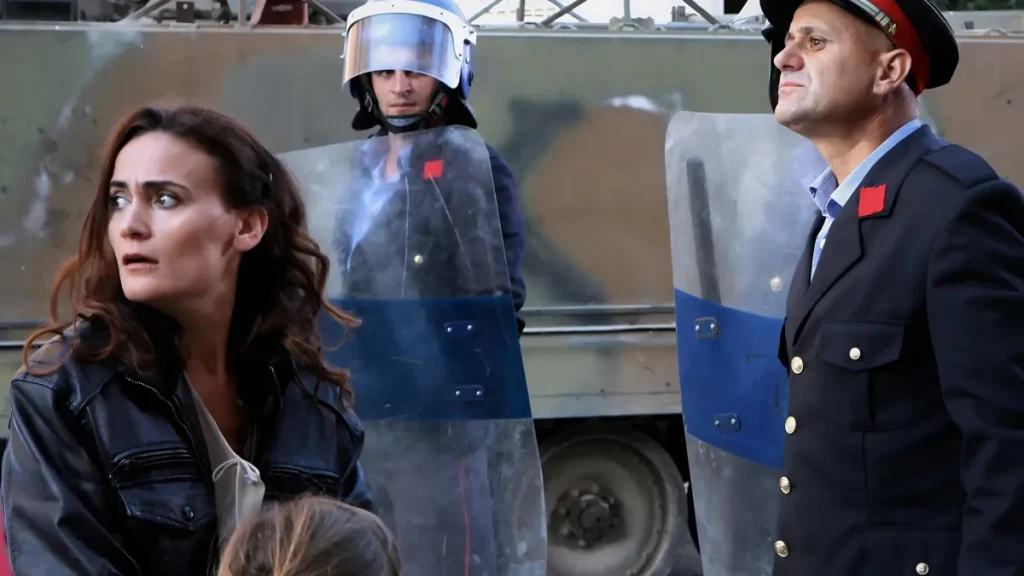
In Residuum, millions of people disappear, and the government quickly gives everyone an answer: it was an alien invasion. People are kept inside “for their safety,” food is rationed, and a militia starts knocking on doors. Zoe, a widow who has already lost her family, escapes in a stolen RV and finds a drifter named Tom hiding inside, and together they begin to follow the clues.

But the film never tells you whether the government really believes its own explanation. Maybe they truly think it was aliens. Maybe they know exactly what it was, and they’re trying to hide that it was the Rapture. We never answer that question, on purpose, because we wanted the audience to sit with it the same way the characters do.
Not preaching to the choir
After our first screening, people came up to us one after another, and I’ll never forget some of what they said. One person told us, “Not because you’re my friend, but this is really one of the best indie dystopian films I’ve seen.” Coming from people who had watched us struggle to make it, that meant more than I can explain.

What I loved most, though, was that people left arguing with each other. Was it the Rapture? Was it an alien invasion? Was the government lying? I think that happened because the story grew naturally, and we never pushed our own opinions into it. So many Christian films feel preachy, and they end up preaching to the choir. We didn’t want to make a film that tells people what to think. We wanted to make one that makes them think.
Far-fetched?
When I first heard about the Rapture as a new believer in Albania, it sounded a little far-fetched to me. Today, after years of living with this story, writing it, and watching people walk out of a theater still talking about it, I see it differently. It’s one of the oldest questions people ask: what would we do if everything we know disappeared overnight, and what would we choose to believe?

Residuum doesn’t answer that for you. Is it the Rapture, or something else? We leave that part to you.
Watch Residuum Watch the trailer
Written by Vilma Zenelaj. Residuum was written and directed by Greta Zenelaj and Vilma Zenelaj.
Sources: Pew Research Center, About four in ten U.S. adults believe humanity is living in the end times (2022); A Thief in the Night; Britannica, Left Behind book series; Macmillan, The Leftovers by Tom Perrotta.