In 2020, like everyone else, Greta and I suddenly had more time than we knew what to do with. I had started writing my first novel, and after two months, I needed a break from it. So one evening, we sat down and talked about what we wanted to work on next, and Mother Teresa came to mind.
She had always been there, somewhere in the future. Being from Albania, we grew up knowing she was one of us, and for years we said, “One day, we have to make a film about Mother Teresa.” We just never knew what that film would be.
The story everyone already knows
So we started where everyone starts. We watched the films that had already been made about her, and we noticed something. Almost all of them told the same story: the nun in the white sari with the blue border, working with the poor in the streets of Calcutta. They were filmed at different moments of her life, but they were all about the woman the world already knew.
Nobody had told the story of the girl.
And the more we thought about it, the more that girl was the one we wanted to meet. A person doesn’t wake up one day and say, “Today, I think I’ll go and care for the sick and the dying in the streets of Calcutta,” and then simply does it. Many other nuns taught at the Loreto school where she taught. Why was she the only one who walked out to serve the poorest of the poor? Something had to have shaped her long before India.
Gonxhe
She was born Anjezë Gonxhe Bojaxhiu on August 26, 1910, in Skopje, to an Albanian family. Gonxhe means “rosebud” in Albanian, and her family called her that. Her father, Nikollë, was a merchant, and her mother, Drane, was a woman of deep faith who opened her door to anyone who needed help. Gonxhe had an older sister, Aga, and a brother, Lazar.

Greta and I read every biography we could find, and we interviewed several of the authors who had written about her. Every one of them was fascinated by her, and every one of them agreed on the same thing: it was her family and her upbringing that made her Mother Teresa. She grew up in a loving, faithful, and generous home, one that cared for the whole community around it.
She also grew up with loss. When she was eight years old, her father died suddenly, and the family’s life changed overnight. Hardship was not something new to her when she reached India. As a child, she had already learned that suffering is not the end of the story, and that what matters is how we respond.
At the heart of that home was her mother. Drane came from Kosovo, and she moved to Skopje when she married Nikollë, who was about fifteen years older than she was. She was humble, devoted to her husband and children, and she loved the church. She was a big part of her community, the kind of woman who fed the poor at her own table and took her daughter with her when she visited the sick. If you want to know where Mother Teresa learned to serve, I think you only have to look at Drane.
Eighteen, and seventeen
In 1928, when she was eighteen, Gonxhe left home to join the Sisters of Loreto in Ireland, and a year later, she was in India. She never saw her mother or her sister again. They were trapped behind the borders of communist Albania, and no matter how hard she tried, she was never allowed to visit them. She did see her brother again, in Italy, in the 1960s.
That is the part I could not let go of.
I left Albania for America when I was seventeen. When you leave like that, so young, you don’t know if you will ever see your parents again. Greta and I lived with that feeling, and so did so many Albanian families of our generation. So when I read about the girl on the train, leaving Skopje with no idea what lay ahead, I wasn’t reading about a saint. I was reading about someone I understood.
I wasn’t reading about a saint. I was reading about someone I understood.
Writing it
The hardest part of writing the script was deciding which years of her life to tell, and how much of each. We didn’t want long scenes or speeches; we wanted every word and every scene to carry the story forward, so we chose only the moments that truly shaped Gonxhe.
Some things we chose to leave in the background. Her father was deeply involved in Albanian politics, and it was a big part of the family’s life, but we didn’t want the film to become a political story, because Mother Teresa was the opposite of politics. We also couldn’t leave out the family friend whom the Bojaxhius trusted and helped, who turned against them out of nothing but jealousy. That part is true, and it was the hardest character for us to understand.
The characters I connect with most are Gonxhe and her mother, Drane. Like them, we lived through political turmoil and the fear of not knowing what tomorrow would bring. When you live through that as a child, it stays with you. It makes you grow up faster. We will never know exactly what Gonxhe felt, but we could imagine it through what we lived ourselves.
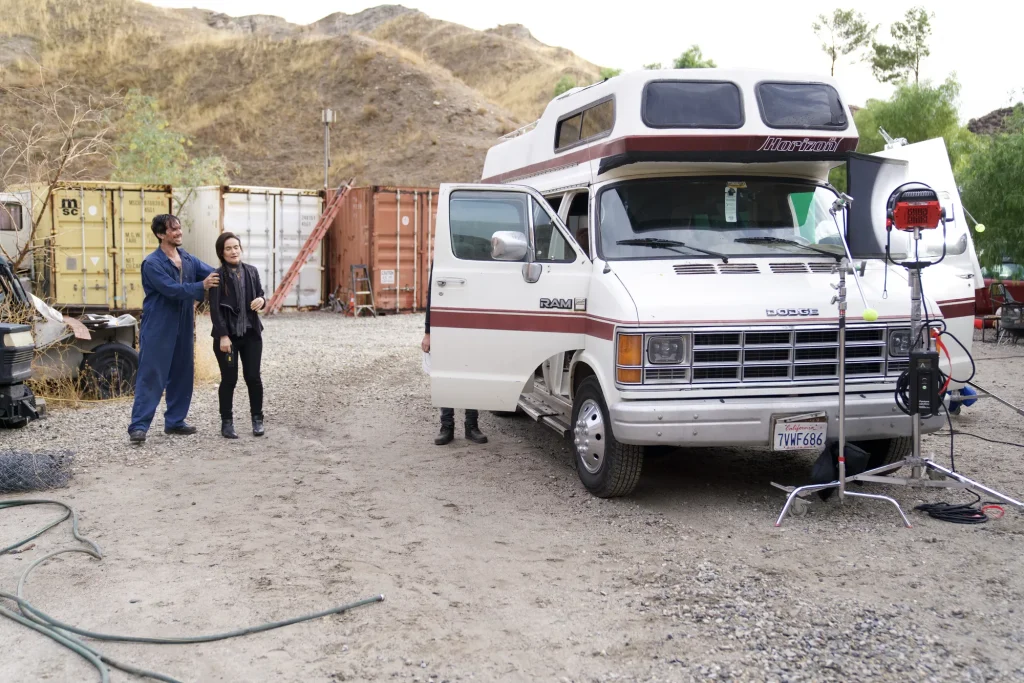
When we pictured where we would film it, we thought of Skopje, where she was born and raised, and of Shkodër, where we shot Shqipe/Eagle and where we feel at home.
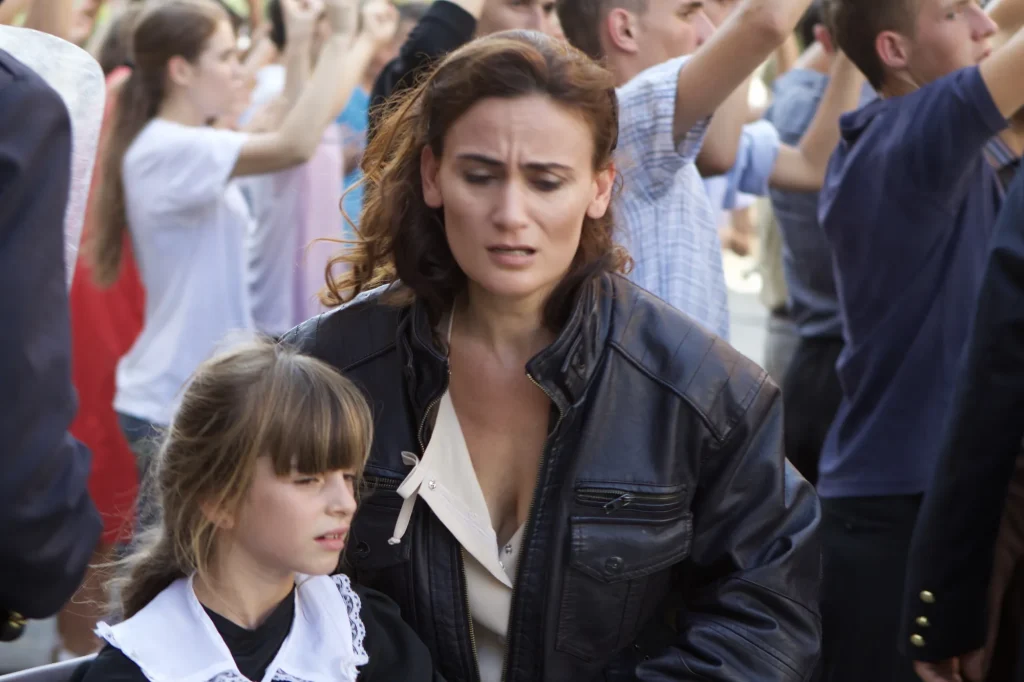
Greta will play Drane, and she will also play Mother Teresa in the 1960s, when she fights to bring her mother and sister out of communist Albania. It means one actress carries both women, the mother who taught her and the woman she became, and I love that.

The door that never opened
I spent two years researching her life, and then I wrote the script. It is called Rosebud, and I still believe it is one of the best things I have ever written. Its tagline says what the whole film is about: every saint was once a daughter.
Then we started knocking on doors, and nobody wanted to finance it.
I kept thinking, do you know who this is? More than a billion people in India love this woman. Films have opened there and made their money back in a single weekend. If you would rather talk numbers than art, fine, the numbers still make sense. But most of the people who passed had never read a single page. The question was never “Is it good?” It was “Who is attached? Who do you know?”
That took me a long time to accept.
Do it anyway
There is a poem called “Do It Anyway” that people have long connected to Mother Teresa, because a version of it hung on the wall of her children’s home in Calcutta. It says that the good you do today may be forgotten tomorrow, and to do good anyway. That if you are honest, people may cheat you, and to be honest anyway. Greta and I have always loved it. It is how she lived, and in a small way, it is how we try to make our films.

So I still have the script. I still believe in it, and I still believe the world should meet the girl in Skopje who learned how to love from her mother, long before anyone called her a saint. One day, we will make it. Until then, we will do it anyway.
And if this story speaks to you, whether you are a producer, an investor, someone who loves Mother Teresa, or simply someone who would like to see this film exist, we would love to hear from you. You can write to us at contact@coloredfilms.net. Sometimes a film only needs one person who believes in it as much as you do.
Watch our films Read: Why Choosing the Right Story Matters
Written by Vilma Zenelaj. Rosebud was written by Vilma Zenelaj and developed with Greta Zenelaj at Colored Films.
Sources: Interviews with Vilma and Greta Zenelaj in Dielli and Epoka e Re (2021); Mother Teresa, early life; “Do It Anyway” is a version of Kent M. Keith’s “Paradoxical Commandments,” which hung at Shishu Bhavan, her children’s home in Calcutta.